





Next-Generation Building Energy Management Systems Market CAGR, SWOT Analysis
The need for simplified building operations is likely to spur the next-generation building energy management systems market. A CAGR of 15.3% is predicted to shape the global market in the upcoming period.
The convergence of conventional and advanced components to augment the management and automation of building systems is expected to drive the next-generation building energy management systems market. The upswing in consumer demand for eco-friendly buildings that are energy-efficient is estimated to add impetus to the next-generation building energy management systems market in the upcoming period.
Next-Generation Building Energy Management Systems Market can be segmented:
By Type
- wired
- wireless
By Application
- commercial buildings
- manufacturing facilities
- educational institutions and hospitals
- government establishments
The market is characterised by the presence of several regional and local providers. Some of the key players in the market are:
- Honeywell
- Johnson Controls
- Schneider Electric
- Siemens
- ABB
- CBRE Group
- CISCO
- Daikin
- Echelon
- GridPoint among others.
The market is categorised as: Middle East, Europe, Africa, Asia-Pacific, North America, and South America. Europe is projected to support the biggest segment in the market in the year 2018. The European regional market has been an initial adopter of BMS. The Asia Pacific regional market is estimated to develop at fast rate for the duration of the forecast due to the intensification in demand for the building of industrial and residential buildings.
Building energy management systems BEMS
Building Energy Management Systems (BEMS) are integrated, computerised systems for monitoring and controlling energy-related building services plant and equipment such as heating, ventilation and air conditioning (HVAC) systems, lighting, power systems and so on.
The phrase Building Energy Management Systems is sometimes used interchangeably with Building Management Systems (BMS), however, strictly speaking, Building Management Systems can be used to monitor and control a wide range of building systems, including fire, smoke detection and alarms, motion detectors, CCTV, security and access control, lifts and so on. Building Energy Management Systems relate specifically to energy-related systems.
Small buildings may have independent controls for energy systems, but for larger or more complex buildings, sites with a number of buildings, or organisations with buildings on a number of sites, the integration of systems operation through a single Building Energy Management System offers greater control and can achieve significant savings. NB Increasingly, simple BEMS are being developed that are suitable for even the smallest buildings.
BEMS provide real-time remote monitoring and integrated control of a wide range of connected systems, allowing modes of operation, energy use, environmental conditions and so on to be monitored and allowing hours of operation, set points and so on to be adjusted to optimise performance and comfort. BEMS can also trigger alarms, in some cases predicting problems and informing maintenance programmes. They allow records to be kept of historical performance, enable benchmarking of performance against other buildings or sites and may help automate report writing.
In 2014, BSRIA reported that the global BEMS market was worth $3.5 billion, or 3 billion Euros, and was growing globally at more than 10% per annum. This increasing interest has resulted from the rising cost of fuel, concerns over energy security, increasingly aggressive environmental targets and the reduced cost of sensors, analytics software and data storage.
Claims for the scale of savings that can be achieved by BEMS range from 10% to 25%. Operated properly, they should allow energy use to be optimised without compromising comfort or performance. However this requires a thorough understanding of how buildings are supposed to perform, and how different systems within them interact.
To function correctly they must be properly designed, installed and commissioned and must have a user interface that is easy to operate. They should then be continually assessed and fine-tuned as performance is better understood over a number of seasons and modes of operation, and changes are made to buildings or operations. Maintenance is also necessary to ensure systems continue to operate correctly, for example, replacing sensors and batteries, checking connections, checking the operation of dampers and valves, upgrading software and so on.
BEMS can be independent installations with separate maintenance contracts, or manufacturer installations which include maintenance. They can be wired or wireless systems. To determine whether a wired or wireless system is the most appropriate, buildings should be audited to test how well signals can be received and how likely disturbances are. Choosing the correct BEMS system then depends on the size and usage of the building, the scale of the project and the budget. As a general rule, larger, more extensive projects tend to be best suited to wireless solutions.
BEMS may have remote outstations that can be interrogated locally, or may be accessible from mobile devices. However, major buildings may be vulnerable to cyber attack, especially when they are associated with prominent organisations. This can be a particular issue where functions operate in the 'cloud', such as cloud-based analytics, and the ability to access and manage multiple buildings remotely. The ability to access live analytics, or receive alarm notifications from hand-held devices has great potential benefits, but may also bring additional risks.
[edit] Related articles on Designing Buildings
- Building energy management systems BEMS.
- BACS building automation controls - the information revolution.
- BS EN 15232 Energy performance of buildings: impact of building automation, controls and building management.
- Building Automation and Control System BACS.
- Building energy efficiency - is building automation the answer?
- Building energy management systems (BEMS) for data centres.
- Building energy simulation software.
- Building management systems.
- Commercial building automation market.
Featured articles
Check out some of the best features and news from Designing Buildings as well as key stories from around the web.

Water sector faces a growing crisis that could slow the delivery of vital infrastructure.
Undervaluing our industrial past

Heritage value changes as taste for building styles changes.
Changing expectations around competence and compliance

New information sheet from CIAT.
Grenfell investigation files passed to CPS

Angela Rayner apologises on behalf of the British state.

Electrical contractors need to understand the practical implications.

The real barrier to getting more value from digital technology.

Your guide to The Construction Reset at UKCW Birmingham.

Accommodating the Victorian and Edwardian working woman. Book review.
Rethinking passive fire protection in design

PFP demands the same level of design rigour as structure or services.
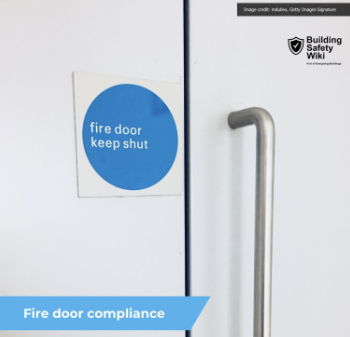
38% of Gen Zs feel safe when a fire door is wedged open.
Stunning images from around the world

Shortlist for CIOB’s Art of Building photography competition.

Guidance for conversion of traditional pre-1919 stone buildings.